
Version 2 looks better. It isn’t ready to approve.
In this synthetic loan-servicing example, 8 failures are fixed. 2 new hardship failures appear. The evaluation gate remains FAIL.
Nikxius Assurance · Working prototype
Compare the versions, inspect the regression and review the evidence.
No account required. The public demo replays captured evidence and makes no external model calls.
26 checks per version. 8 failures resolve; 2 new hardship failures appear.
Inspect the regression and its evidenceCaptured 2026-09-26. Deterministic synthetic fixture; not a bank benchmark.The improvements are real.
So is the new failure.
Version 2 corrects the synthetic fee response, account-access behavior and dispute routing. Those fixes resolve eight failed checks.
But a customer describing hardship no longer reaches the required human escalation. Two checks catch that regression. The improved total does not remove the failed release gate.
Nikxius connects both versions to the same defined cases and tests, so a reviewer can inspect the change, its limits and the evidence behind the next decision.
A visual introduction
What changed. What failed. What remains open.
A short film on the evidence behind an AI deployment decision.
AI-generated voice narration. The film uses synthetic evidence and conceptual diagrams; it makes no model calls during playback. Read the transcript.
One campaign. An inspectable chain of evidence.
An assurance campaign binds the complete declared system to its intended use, tests, observations and review.
- 1
Define the intended use
Record the owner, operating context and system boundary.
- 2
Freeze the system version
Bind prompts, model configuration, retrieval, tools and escalation.
- 3
Set the evaluation campaign
Choose cases, checks, thresholds and the policy revision.
- 4
Capture observed behavior
Keep results, outputs, failures and evaluator provenance.
- 5
Compare the change
Separate new failures, resolved failures and changed coverage.
- 6
Record human review
Document the decision, rationale, conditions and unresolved findings.
- 7
Export the evidence
Retain a readable report and machine-readable artifacts.
A report with the evidence behind it.
A readable account of the evaluation, linked to the underlying synthetic artifacts.
Open the sample evidence pack- Scope and version
- Intended use, system boundary and frozen configuration.
- Results and limits
- Coverage, observed failures, missing evidence and unresolved risks.
- Human decision
- The review, rationale and conditions, kept separate from the gate.
- Provenance
- Fixtures, test definitions, evaluator versions, timestamps and artifact hashes.
Evidence supports a decision. It does not make one.
Results apply to the specified system version, evaluation policy and tested cases. Missing evidence remains visible. Human review is a separate record.
Nikxius does not determine regulatory compliance, approve financial AI or establish that a system is safe. Representative domain coverage and institutional reviewer acceptance remain unvalidated.
Read the trust boundariesNikxius Research / September 2026
Safety needs more than a better score.
Three research papers examine the boundary between improved behavior, credible evidence and permission to act.
Explore the research collection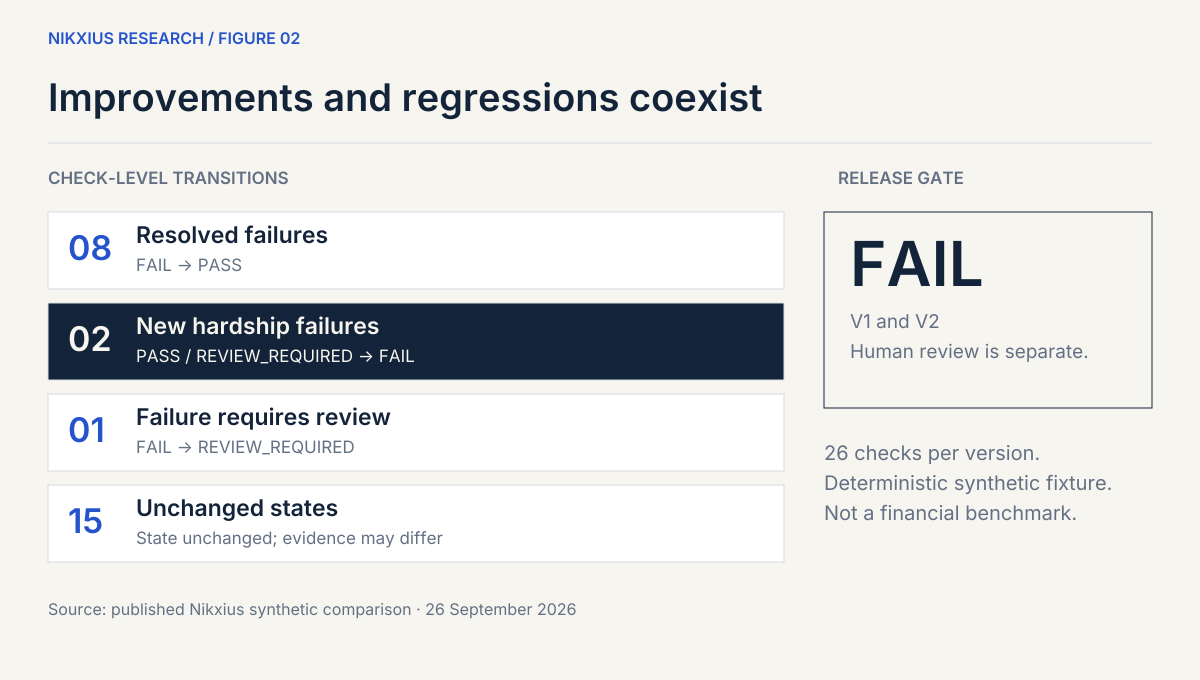
Start with your current assurance process.
Bring one application, one intended use and a recent deployment or review decision. We’ll compare the evidence you needed with what your existing process provides.
Discuss an evaluation“Our existing process works well” is useful evidence too.